
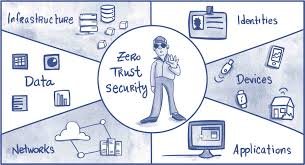
Description
Zero Trust Architecture Implementation
-
Identity & Access Management (IAM) – Ensures only verified users and devices can access resources based on strict authentication policies.
-
Multi-Factor Authentication (MFA) – Adds extra layers of user verification beyond passwords, such as biometrics or one-time codes.
-
Least-Privilege Access Control – Grants users and devices only the permissions necessary to perform their tasks, minimizing risk.
-
Network Micro-Segmentation – Divides networks into smaller zones to contain threats and prevent unauthorized lateral movement.
-
Continuous Verification – Monitors and re-evaluates access permissions dynamically based on context, risk level, and user behavior.
-
Device Posture Assessment – Verifies that devices meet security standards (e.g., antivirus, patches, encryption) before granting access.
-
User Behavior Analytics (UBA) – Detects anomalies or suspicious activity using AI-driven behavior monitoring.
-
Data Encryption & Protection – Secures sensitive data at rest, in transit, and in use through advanced encryption methods.
-
Policy-Based Access Control (PBAC) – Uses adaptive access rules based on factors like user role, location, and device trust level.
-
Secure Access Service Edge (SASE) Integration – Combines networking and security functions into a unified, cloud-delivered framework.
-
Endpoint Security Enforcement – Ensures endpoints are compliant and protected with EDR and anti-malware tools.
-
Cloud & Application Security – Extends Zero Trust principles to SaaS, PaaS, and IaaS environments for consistent control.
-
Threat Detection & Response Automation – Uses AI and SOAR systems to automatically identify and mitigate potential threats.
-
Compliance & Audit Support – Helps organizations meet regulatory standards such as ISO 27001, NIST 800-207, and GDPR.
-
Centralized Policy Management – Simplifies governance by managing all access rules and enforcement policies from one platform.
Reviews
There are no reviews yet.