
Description
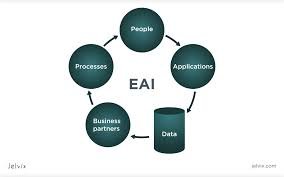
Enterprise Application Integration (EAI)
-
System Interoperability – Connects diverse systems, both legacy and modern, for unified data flow and process automation.
-
Real-Time Data Synchronization – Ensures instant data updates across integrated applications to maintain consistency.
-
Middleware Integration – Uses middleware platforms to manage communication and data translation between systems.
-
API Management & Integration – Facilitates secure, scalable connectivity through REST, SOAP, and GraphQL APIs.
-
Workflow Automation – Streamlines business processes by automating repetitive, cross-system tasks.
-
Data Transformation & Mapping – Converts data formats and structures between applications to ensure compatibility.
-
Cloud & On-Premises Integration – Bridges applications hosted on different environments for hybrid business operations.
-
Message Queuing & Event-Driven Processing – Enables asynchronous data exchange using technologies like Kafka or RabbitMQ.
-
Centralized Monitoring & Management – Provides a single dashboard to track data flows, performance, and errors.
-
Security & Access Control – Implements encryption, authentication, and authorization for safe data exchange.
-
Scalability & Flexibility – Adapts to new applications, systems, or business processes with minimal disruption.
-
Error Handling & Recovery – Detects, logs, and resolves integration failures automatically.
-
Pre-Built Connectors – Offers ready-made connectors for popular systems like SAP, Salesforce, Oracle, and Microsoft Dynamics.
-
Data Governance & Compliance – Maintains data quality and ensures compliance with standards such as GDPR and HIPAA.
-
Improved Business Intelligence – Consolidates data across platforms to support accurate analytics and reporting.
Reviews
There are no reviews yet.