
Description
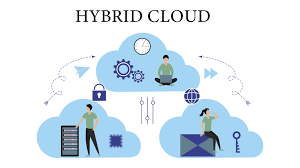
Hybrid Cloud Solutions
-
Unified Cloud Management – Provides a single control panel for managing resources, workloads, and services across private and public clouds.
-
Seamless Data Integration – Enables secure and efficient data exchange between on-premises systems and cloud environments.
-
Workload Portability – Allows applications and workloads to move easily between clouds for optimized performance and cost efficiency.
-
Scalability & Flexibility – Expands capacity dynamically using public cloud resources during peak demand while maintaining core workloads on-premises.
-
Cost Optimization – Balances workload distribution to minimize expenses while maximizing performance and resource utilization.
-
Enhanced Security & Compliance – Applies consistent security controls, encryption, and compliance policies across all cloud environments.
-
Disaster Recovery & Business Continuity – Ensures high availability and quick recovery through cloud-based backup and replication.
-
Interoperability – Supports compatibility between different platforms, operating systems, and virtualization technologies.
-
Automation & Orchestration – Automates workload deployment, scaling, and monitoring across hybrid environments.
-
Edge & On-Premises Integration – Connects edge computing and local infrastructure seamlessly with cloud services for real-time processing.
-
Centralized Monitoring & Analytics – Offers unified visibility into performance, usage, and security across hybrid resources.
-
Customizable Architecture – Adapts to specific business requirements, enabling hybrid setups tailored for different workloads.
-
Vendor Neutrality – Reduces dependency on a single cloud provider, enhancing flexibility and resilience.
-
AI & ML Integration Support – Enables hybrid deployment of AI models and data pipelines across private and public clouds.
-
Optimized Network Connectivity – Ensures low-latency, high-speed connections between clouds using VPNs, SD-WAN, or direct interconnects.
Reviews
There are no reviews yet.