
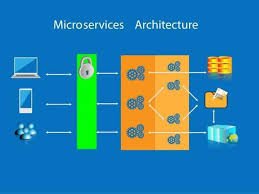
Description
Microservices Architecture Development
-
Modular Service Design – Breaks applications into small, independent services that can be developed and deployed separately.
-
API-Driven Communication – Uses REST, GraphQL, or gRPC APIs for seamless communication between services.
-
Independent Deployment – Enables updates or scaling of individual services without downtime for the entire system.
-
Scalability & Performance – Allows services to scale independently based on demand, optimizing resource use.
-
Technology Flexibility – Supports different programming languages, databases, and frameworks for each service.
-
Continuous Integration & Deployment (CI/CD) – Integrates with DevOps pipelines for rapid development and automated deployments.
-
Resilience & Fault Isolation – Contains failures within a single service, preventing system-wide outages.
-
Containerization Support – Uses Docker and Kubernetes for easy deployment, scaling, and management of services.
-
Cloud-Native Compatibility – Designed to leverage cloud platforms for elasticity, monitoring, and automation.
-
Service Discovery & Load Balancing – Automatically locates and routes traffic to available service instances.
-
Monitoring & Observability – Implements centralized logging, tracing, and metrics for real-time insights.
-
Security & Access Control – Applies authentication, authorization, and encryption to each microservice.
-
Automated Testing Frameworks – Ensures quality and reliability with service-level testing and integration validation.
-
Event-Driven Architecture – Supports asynchronous communication and real-time data processing using message brokers.
-
Improved Developer Productivity – Enables smaller, focused teams to work on specific services independently, accelerating innovation.
Reviews
There are no reviews yet.